Keeping the Factories: How Europe Can Retain High-Tech Industry
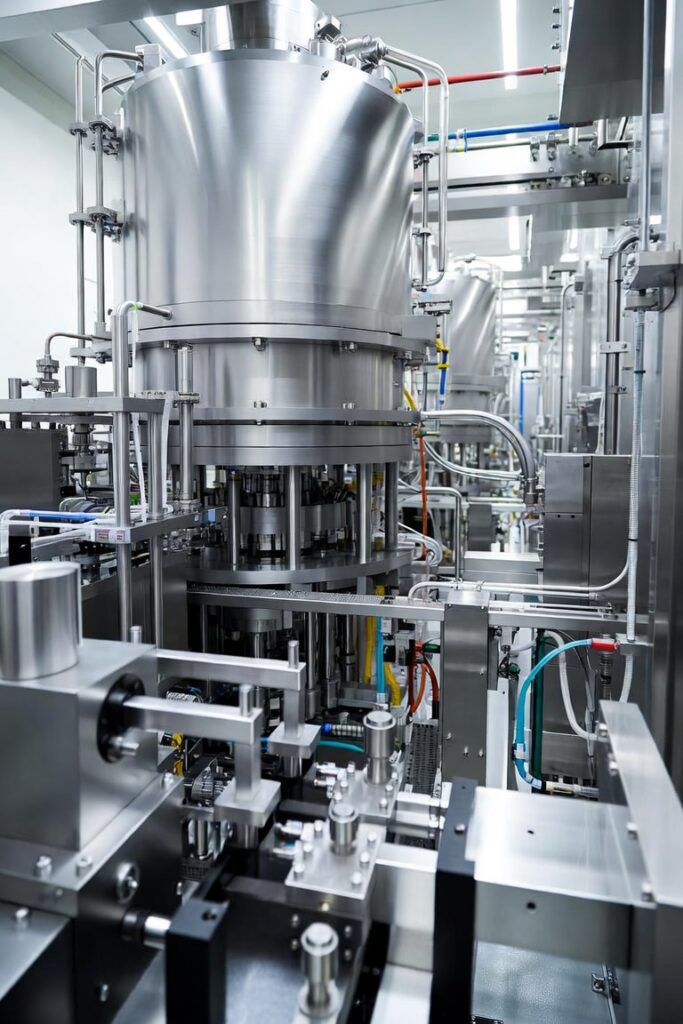
Europe invented much of the technology that now defines modern manufacturing, from precision engineering to industrial chemistry to semiconductor design. Yet increasingly, the actual production has drifted elsewhere — to the United States, drawn by subsidies and cheap energy, and to Asia, drawn by lower costs and, in many sectors, faster-moving supply chains. A continent that stops making high-value goods eventually loses the skills, the supplier networks, and the innovation feedback loop that come from actually building things, not just designing them. Retaining high-tech manufacturing in Europe is therefore not a nostalgic project — it is about keeping the industrial base that supports future innovation, employment, and strategic autonomy all at once.
Industrial Funds as Patient Capital
High-tech manufacturing — semiconductor fabs, battery gigafactories, advanced materials plants — requires enormous upfront capital and years before profitability, a profile that private markets are often reluctant to finance alone, especially when competing against state-backed Chinese or American rivals. Dedicated industrial funds, whether at the EU level or coordinated among member states, can provide the “patient capital” that bridges this gap: loans, equity stakes, or co-investment alongside private capital in projects deemed strategically important.
The risk with any such fund is picking losers — subsidizing projects that would have failed regardless, or propping up incumbents rather than genuinely competitive new entrants. Funds that work well tend to have clear technical criteria, co-investment requirements from private partners who have skin in the game, and sunset clauses rather than indefinite life support.
Cheaper Energy for Industry
Energy costs have become one of the sharpest competitive disadvantages for European manufacturers, particularly energy-intensive sectors like steel, chemicals, and glass, where electricity and gas prices in Europe have at times run several multiples above those in the United States. No amount of tax incentive or industrial fund fully compensates for a persistent structural cost gap of that size.
Addressing this connects directly back to Europe’s broader energy strategy: more domestic generation from nuclear and renewables, a genuinely integrated grid that lets cheap power flow to where demand is, and targeted industrial electricity tariffs or contracts-for-difference that shield manufacturers from the most extreme price spikes. Some of this is already happening through national schemes, but a coordinated EU-level approach would prevent industry from simply relocating to whichever member state offers the cheapest subsidized power, which helps no one at the continental level.
Tax Incentives
Targeted tax credits for capital investment, research and development, and advanced manufacturing equipment can meaningfully shift where a multinational chooses to locate its next facility. The U.S. Inflation Reduction Act demonstrated how aggressively a large economy can use tax incentives to pull green-tech manufacturing toward it, prompting some European firms to consider shifting investment across the Atlantic.
Europe’s challenge is coordinating this across 27 fiscal systems without triggering a race-to-the-bottom subsidy war between member states, which would waste public money competing against each other rather than against outside competitors. An EU framework that allows generous incentives for genuinely strategic sectors, while setting common floors and ceilings, would let Europe compete externally without cannibalizing itself internally.
Automation as a Competitiveness Tool
One reason high-wage economies retain manufacturing at all is automation: robotics and advanced process control can offset labor cost disadvantages that would otherwise make production uncompetitive against lower-wage regions. Countries like Germany and, further afield, South Korea and Japan have shown that heavily automated factories can remain globally competitive even with high domestic wages.
Investment in automation raises a familiar tension around jobs — fewer workers may be needed per unit produced — but the realistic alternative in many sectors is not “automation versus the current workforce,” it is “automation versus the factory closing and moving abroad entirely.” Pairing automation investment with retraining programs for displaced workers, rather than treating it purely as a cost-cutting measure, gives the transition a better chance of maintaining public support.
Protection Against Dumping
Even the best-run European factory can be undercut by foreign producers selling below cost to capture market share and eliminate competition — a practice long associated with Chinese steel, solar panels, and, more recently, electric vehicles. Anti-dumping tariffs and countervailing duties exist precisely to offset this, and the EU has used them with increasing frequency, including recent duties on Chinese-made electric vehicles.
These measures involve real trade-offs. Tariffs raise costs for European consumers and downstream industries that rely on the targeted imports, and they risk retaliation against European exporters in the country. They are also a genuinely contested policy tool: some economists argue they mainly delay industrial adjustment rather than prevent it, while others see them as necessary to prevent the kind of complete sector wipeouts Europe experienced in solar panel manufacturing during the 2010s. What is not seriously disputed is that unilateral disarmament — allowing dumping to continue unanswered while competitors protect their own markets — tends to accelerate deindustrialization rather than avoid it.
Conclusion
None of these five tools works well in isolation. Industrial funds without cheap energy finance factories that can’t compete on operating costs. Tax incentives without automation attract investment that later struggles against lower-wage competitors. Automation without retraining creates political backlash that undermines the policy’s durability. And any of it can be undone by unchecked dumping that prices European producers out of their own market regardless of how efficient they are. Retaining high-tech manufacturing in Europe means treating industrial policy as a coordinated system, not a menu of separate options to choose from individually.